
Flooring plays a major role in the durability, safety, and visual appeal of buildings. From residential homes to industrial facilities, the right flooring system can significantly affect long-term maintenance, structural performance, and everyday usability. Among modern flooring solutions, epoxy flooring has become widely recognized for its durability, seamless finish, and ability to withstand demanding environments.
Many architects, facility managers, and homeowners are turning to epoxy surfaces because they offer a strong balance between performance and design flexibility. These flooring systems are commonly used in industrial warehouses, healthcare facilities, commercial buildings, and even modern residential interiors. Understanding how epoxy flooring works and where it performs best helps property owners make informed decisions about their flooring choices.
This guide explains the structure, benefits, and common uses of epoxy flooring while exploring how it compares to other flooring systems. It also highlights installation considerations, maintenance requirements, and design possibilities available with modern epoxy technology.
Understanding How Epoxy Floor Coatings Create Durable and Seamless Surfaces in Residential and Commercial Spaces
Epoxy flooring is created by applying multiple layers of epoxy resin onto a prepared concrete surface. The resin and hardener combine through a chemical reaction, forming a rigid plastic-like material that bonds tightly to the floor beneath it. This process results in a seamless and highly durable surface.
Unlike traditional flooring materials that rely on separate tiles or planks, epoxy coatings create a continuous surface with no visible joints or gaps. This seamless characteristic offers several advantages:
- Prevents dirt and bacteria from accumulating in cracks
- Improves resistance to moisture penetration
- Creates a smooth and uniform appearance
- Simplifies cleaning and sanitation
Because of these qualities, many facilities with strict hygiene standards rely on epoxy flooring to maintain safe and easy-to-clean surfaces.
Epoxy coatings can also be applied with different thickness levels depending on the environment. Thin coatings are often used in residential garages, while heavy-duty epoxy systems are common in factories and warehouses where floors must support machinery and constant foot traffic.
Key Structural Components That Make Epoxy Flooring Resistant to Chemicals, Stains, and Heavy Traffic Environments
The durability of epoxy flooring comes from its unique chemical composition. When the epoxy resin and curing agent combine, they create a hardened polymer structure that adheres strongly to the base surface.
Several components contribute to its strength and resistance:
- Epoxy Resin
This forms the primary bonding material that creates the hardened surface. - Hardener or Curing Agent
The hardener triggers the chemical reaction that transforms the liquid resin into a solid structure. - Aggregates or Fillers
In some installations, aggregates such as quartz or sand are added to improve texture and strength. - Protective Topcoats
Topcoats increase UV resistance, scratch resistance, and gloss retention.
Because of this layered structure, epoxy floors offer excellent protection against:
- Chemical spills
- Oil stains
- Abrasion from heavy equipment
- Constant vehicle movement
These properties make epoxy flooring particularly suitable for industrial and commercial environments where ordinary floor finishes would quickly wear out.
Comparing Epoxy Surfaces With Other Flooring Systems in Terms of Durability, Maintenance, and Lifespan
When evaluating flooring options, durability and long-term maintenance are important factors. Epoxy flooring stands out because it combines resilience with relatively simple upkeep.
Here is how epoxy compares with other common flooring types:
Epoxy Flooring
- Seamless surface
- Highly resistant to chemicals and abrasion
- Long lifespan when properly installed
- Easy to clean and maintain
Vinyl Flooring
Vinyl floors are widely used in homes and offices due to their flexibility and wide range of designs. Systems such as wooden vinyl flooring offer the appearance of wood with easier maintenance. However, vinyl surfaces may not withstand heavy industrial traffic the same way epoxy coatings can.
Natural Wood Flooring
Wood flooring provides natural warmth and character, especially when using materials like reclaimed timber. Options such as reclaimed wood dubai are valued for their sustainability and unique aesthetic appeal. Despite their beauty, wood floors require careful maintenance and may not be ideal for moisture-prone or industrial areas.
Terrazzo Flooring
Terrazzo is another durable flooring option that combines decorative stone aggregates with cement or epoxy binders. Systems like terrazzo epoxy flooring blend decorative design with durability, often used in public spaces and commercial interiors.
Each flooring type has advantages depending on the environment, but epoxy flooring remains one of the most durable choices for high-performance settings.
Common Industries and Environments Where Epoxy Flooring Systems Are Most Widely Applied Today
Epoxy flooring has become widely used across many industries because it can withstand demanding operational conditions.
Some of the most common environments include:
Industrial Facilities
Factories and manufacturing plants often require floors that resist chemical spills, heavy equipment, and constant movement. Epoxy coatings provide the durability needed for these conditions.
Warehouses and Logistics Centers
Large storage facilities rely on smooth floors for forklifts and pallet systems. Epoxy surfaces support heavy loads while minimizing surface damage.
Healthcare Facilities
Hospitals and laboratories benefit from seamless flooring surfaces that support sanitation and easy cleaning.
Commercial Buildings
Shopping malls, retail stores, and office buildings sometimes use decorative epoxy coatings to create visually appealing interiors.
Residential Spaces
In recent years, epoxy floors have become popular in:
- Garages
- Basements
- Modern kitchens
- Contemporary living areas
These applications demonstrate the versatility of epoxy flooring across both functional and decorative environments.
How Surface Preparation and Substrate Condition Influence the Performance of Epoxy Flooring Installations
Proper surface preparation is essential for successful epoxy floor installation. Even the strongest epoxy materials cannot perform well if the underlying surface is poorly prepared.
Before applying epoxy coatings, contractors typically perform several preparation steps:
- Cleaning the Surface
Removing dirt, grease, oil, and contaminants ensures proper adhesion. - Repairing Cracks or Damage
Structural defects in the concrete must be repaired before installation. - Grinding or Shot Blasting
Mechanical preparation roughens the surface so epoxy can bond effectively. - Moisture Testing
Excess moisture in the concrete can prevent epoxy from curing properly. - Priming the Surface
A primer layer improves bonding between the epoxy and concrete substrate.
When these preparation steps are completed correctly, the epoxy flooring system can achieve maximum durability and long-term performance.
Exploring Decorative Finishes, Colors, and Textures Available With Modern Epoxy Flooring Technology
One reason epoxy flooring continues to gain popularity is the wide variety of design options available today. Modern epoxy systems can be customized with different colors, patterns, and textures to suit architectural preferences.
Some common decorative epoxy finishes include:
Metallic Epoxy
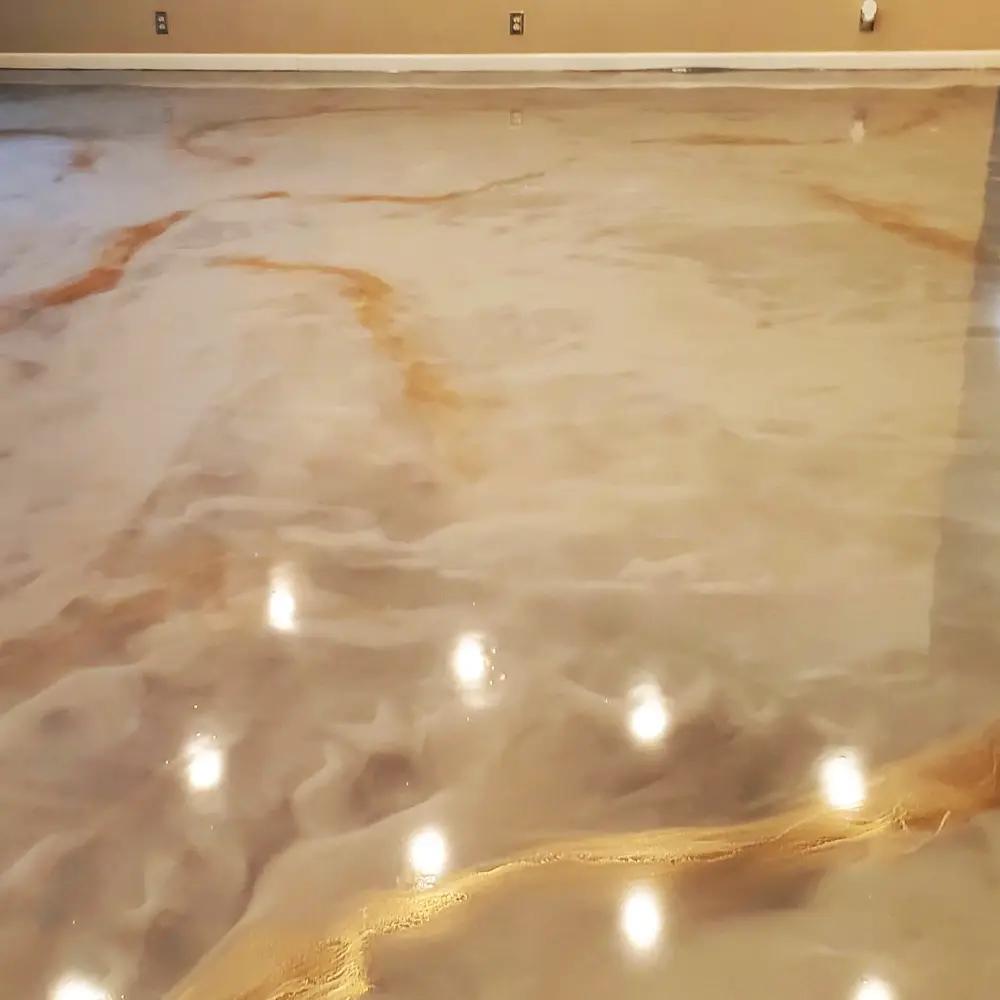
Metallic pigments create dramatic swirling patterns that resemble marble or flowing metal.
Flake Epoxy Systems
Colored flakes are embedded into the epoxy layer to add texture and visual depth.
Quartz Epoxy Flooring
Quartz aggregates provide enhanced durability while producing a decorative finish.
Solid Color Coatings
Simple solid-color epoxy floors are often used in industrial settings for clarity and safety.
Decorative epoxy coatings can also incorporate safety features such as anti-slip textures or color-coded zones for workplace organization.
Environmental and Safety Considerations When Installing Epoxy Coatings in Indoor Areas
Although epoxy flooring offers many benefits, proper installation and material selection are important for maintaining indoor safety and environmental quality.
Several factors must be considered during installation:
- Ventilation during application to manage fumes
- Proper curing time before allowing foot traffic
- Use of low-VOC formulations when possible
- Slip-resistant textures in areas prone to moisture
Modern epoxy products are increasingly formulated to meet environmental standards while maintaining strong performance characteristics.
In addition, many facilities apply safety markings directly into epoxy floors, helping define pathways, hazard zones, and work areas.
Maintenance Practices That Help Epoxy Floors Remain Glossy, Clean, and Damage-Resistant for Years
One of the most appealing aspects of epoxy flooring is its relatively simple maintenance routine. With basic care, epoxy floors can maintain their appearance and functionality for many years.
Recommended maintenance practices include:
Routine Cleaning
- Sweeping or dust mopping to remove loose debris
- Using mild cleaning solutions for deeper cleaning
Preventing Surface Damage
- Avoid dragging heavy equipment across the floor
- Use protective pads under machinery or furniture
Managing Spills Quickly
While epoxy floors resist stains, cleaning spills promptly helps maintain their appearance.
Periodic Inspections
Checking for scratches or minor damage allows early repairs before larger issues develop.
With proper maintenance, epoxy floors can maintain their glossy appearance and structural strength even in demanding environments.
Conclusion
Epoxy flooring has become one of the most reliable and versatile flooring solutions used in modern construction and interior design. Its seamless structure, chemical resistance, and long lifespan make it suitable for a wide range of environments, from industrial warehouses to contemporary residential spaces.
By understanding how epoxy coatings work, where they are most effective, and how they compare with other flooring materials, property owners can make informed decisions when selecting flooring systems. With proper installation and maintenance, epoxy flooring can deliver long-term durability while supporting both functional and aesthetic requirements.
FAQs
What materials are typically used to create epoxy flooring systems?
Epoxy flooring systems are made by combining epoxy resin with a curing agent or hardener. This chemical reaction forms a durable polymer surface that bonds tightly to concrete floors.
Why is epoxy flooring considered highly durable for industrial areas?
The hardened epoxy surface resists abrasion, chemicals, heavy loads, and constant traffic, making it suitable for factories, warehouses, and industrial environments.
How long does a properly installed epoxy floor usually last?
When installed correctly and maintained properly, epoxy floors can last 10 to 20 years or more depending on traffic levels and environmental conditions.
What types of buildings benefit most from epoxy floor coatings?
Industrial facilities, hospitals, laboratories, commercial buildings, garages, and warehouses commonly benefit from epoxy flooring systems.
Can epoxy flooring be installed over existing concrete surfaces?
Yes. In most cases, epoxy flooring is applied directly over prepared concrete surfaces. Proper cleaning, repair, and grinding of the concrete are necessary to ensure strong adhesion.